
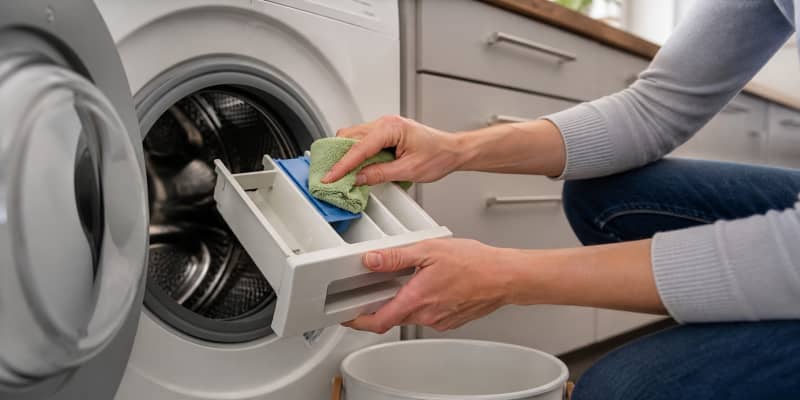
A washing machine that smells damp or leaves black flecks on white shirts is telling you the drum, drawer and seal are overdue a deep clean. Modern low-temperature cycles and liquid detergents are gentler on clothes but leave a residue that classic 90-degree cotton washes used to burn off. Add a small London flat with a machine tucked under the counter, doors closed, and you have the perfect environment for bacterial biofilm. Learning how to clean a washing machine properly, top to bottom, stops the smell coming back a week later and adds years to the pump and heating element.
Quick answer
To clean a washing machine, pull out and wash the detergent drawer in hot soapy water, wipe the rubber door seal with a 50:50 vinegar-water solution, and clear the pump filter behind the small hatch at the base. Then run an empty 90 °C cotton cycle with 250 ml white vinegar in the drum and 100 g soda crystals in the drawer. Leave the door and drawer ajar overnight to dry. Repeat monthly.
Why washing machines smell
Low-temperature washing and liquid detergents leave a biofilm of soap, fabric softener and fats on the drum, hoses and seal. Bacteria feed on the biofilm and produce the classic damp-towel smell that clings to clothes even after they come out clean. A proper monthly deep clean at high temperature strips the biofilm before it takes hold. UK households that wash mostly at 30 or 40 degrees to save energy need to compensate with a monthly hot maintenance wash — it uses less energy overall than replacing a smelly machine every three years.
Read also: How to clean a dishwasher with vinegar
Tools you’ll need
- 250 ml white vinegar
- 100 g soda crystals (available at most supermarkets in the laundry aisle)
- Old toothbrush and microfibre cloths
- Shallow tray or roasting dish for pump-filter drainage
- Rubber gloves
- Torch for the door seal fold
Cleaning the drawer
- Pull the drawer fully out — most have a release tab in the softener compartment.
- Soak it in a sink of hot water and washing-up liquid for 20 minutes.
- Scrub every corner with an old toothbrush, paying attention to the softener siphon.
- Wipe the cavity where the drawer sits — mould loves the roof of this space. Use a torch to inspect.
- Dry the drawer before refitting.
Cleaning the door seal
Pull back the rubber gasket at the top and shine a torch inside. Expect to find hair, coins, a decade-old raisin and a black slimy layer. Wipe with a cloth soaked in a 50:50 white vinegar and water solution, working around the whole seal. For stubborn black mould, apply a paste of bicarbonate of soda and leave for 10 minutes before scrubbing. Never use bleach — it perishes the rubber. Check the bottom of the seal (the six o’clock position) too — water pools here and mould gathers first.
Read also: Remove fridge odours naturally
Clearing the pump filter
- Place a shallow tray in front of the small door at the bottom.
- Unscrew the filter cap counter-clockwise — expect a litre of grey water.
- Remove the filter, rinse under the tap and remove hair, buttons and lint.
- Inspect the pump housing behind the filter with a torch — clear any debris.
- Refit the filter and cap firmly.
Running the deep-clean cycle
With the drawer, seal and filter clean, run an empty 90 °C cotton wash. Add 250 ml of white vinegar into the drum and 100 g of soda crystals into the drawer. This hot alkaline-plus-acid rinse strips residue and kills bacteria. Leave the door and drawer ajar afterwards to dry. Some newer machines (Bosch, Miele, LG) have a dedicated Drum Clean cycle — use it monthly with soda crystals in place of a proprietary tablet, which achieves the same result at a fraction of the cost.
How often
- Drawer: rinse weekly, deep clean monthly
- Seal: wipe weekly, deep clean monthly
- Pump filter: check every three months
- Full deep-clean cycle: monthly
- Descaling in hard-water areas: quarterly with citric acid instead of vinegar
Read also: How to clean a fridge and freezer properly
Common mistakes
- Using too much detergent — the manufacturer’s mark on the drawer is generous already
- Overloading the drum — clothes cannot tumble and residue stays behind
- Closing the door and drawer immediately after a wash — trap moisture, invite mould
- Skipping fabric softener entirely — a light dose helps rinsing, but too much coats the drum
- Using tablets in a machine designed for powder or vice versa — check the manual
Preventing the smell from returning
Leave the door and drawer open for an hour after every wash so the drum dries. Use liquid detergent sparingly — powder cleans the machine better because it contains bleaching agents that also disinfect the drum. Run a hot wash at least once a week: towels and bedding at 60 °C is ideal. In flats where the machine sits behind a cupboard door, prop the cupboard open too — nothing dries in a sealed space.
Conclusion
A monthly maintenance wash keeps laundry fresh and extends the life of the pump and seal. Drawer, seal and filter clean, plus a 90-degree empty run with vinegar and soda crystals — that is the whole ritual. If you are moving out, moving in, or tackling a whole utility area, book a full appliance deep clean at Maggie’s appliances cleaning in London.
