
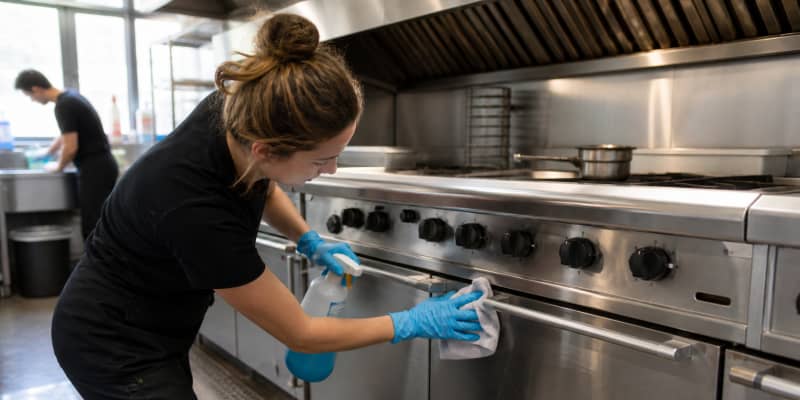
A structured EHO compliance checklist is the single best defence against an unexpected inspection dropping your food hygiene rating. Environmental Health Officers assess three areas: food handling practices, structural condition and confidence in management, and cleaning underpins all three. A weak score under the Food Hygiene Rating Scheme is public information from day one; strong scores are a marketing asset. This checklist reflects what our London commercial cleaning team sees on a typical inspection day.
Quick answer
An EHO compliance checklist should cover documented cleaning schedules, temperature records, pest control, allergen management, staff training, structural cleanliness of surfaces and equipment, and hot water and hand-washing provision at every sink. Keep 12 months of signed records in a single inspection folder and expect the officer to arrive unannounced.
Food hygiene and temperature control
The EHO will check your temperature records and how you manage the cold chain from delivery to plate.
- Fridges below 5 C, freezers below -18 C, with daily temperature logs.
- Hot holding above 63 C for buffets and self-service.
- Delivery temperatures recorded and rejected if out of range.
- Probe thermometer calibrated with iced and boiling water tests.
- Cooked food cooled to 8 C within 90 minutes.
- Blast chillers logged after every use.
Read also: TR19 grease extraction cleaning explained
Structural cleanliness and repair
Walls, ceilings, floors and equipment must be in good repair and cleanable. Common inspection points:
- Grout in tiled floors intact and free of grease.
- Coving between wall and floor in good repair.
- Extractor canopy free of grease build-up (see TR19).
- Behind and beneath fryers, ovens and prep tables free of debris.
- Door seals on cold rooms and fridges intact and clean.
- Lighting diffusers over food areas free of dust and pests.
- Ceilings free of flaking paint above food areas.
Documented cleaning schedules
The EHO will ask to see your written cleaning schedule and staff sign-off records. Every kitchen needs a schedule that breaks tasks into daily, weekly, monthly and periodic frequencies, with a named responsible person for each.
- Print the schedule and pin it in the kitchen.
- Have staff initial and date each task as completed.
- Retain 12 months of completed schedules for inspection.
- Review the schedule quarterly with your head chef.
- Add contractor visits (TR19, grease trap, pest) to the same document.
Read also: Restaurant cleaning schedule template
Pest control, chemicals and allergens
Confidence in management is scored on paperwork as much as practice. Keep the following in a single inspection folder:
- Pest control contract with a schedule of visits and reports.
- Chemical safety data sheets (COSHH) for every product used.
- Allergen matrix for every menu item, updated at every menu change.
- HACCP or Safer Food, Better Business pack, dated and initialled.
- Staff training certificates (Level 2 minimum for food handlers).
- Natasha’s Law compliance (PPDS labels for pre-packed for direct sale).
Hand washing and hot water
Every food-preparation area must have a dedicated hand-wash basin with hot and cold running water, liquid soap, and single-use towels or a hand dryer. The EHO will run every hand basin to check hot water reaches at least 40 C within 20 seconds. Basins used for food prep or dish washing do not count.
Read also: Landlord kitchen safety checklist
Waste, drainage and grease traps
Waste bins must be foot-operated, lined and emptied at least daily. External bin stores must be pest-proof. Drains must run freely, and grease traps must be serviced at documented intervals to prevent blockages and odours. Keep waste transfer notes for two years minimum. Under the Environmental Protection Act 1990, you must use a licensed carrier for commercial waste and cannot dispose of used cooking oil down the drain.
Common EHO scoring pitfalls
- Cleaning schedules that stop being signed midway through the month.
- Temperature logs with implausible identical readings day after day.
- Missing TR19 extraction certificate for the last cycle.
- Chef’s whites hung over food preparation areas.
- Chemicals stored above food or without labels.
- Fridge seals torn or blackened with mould.
Read also: How commercial cleaning cuts your insurance
Preparing for the visit
When an EHO arrives:
- Greet them politely; they do not need an appointment.
- Offer the inspection folder immediately.
- Walk the kitchen with them and take notes on any points raised.
- Ask for a written follow-up if verbal advice is given.
- Do not attempt to catch up on cleaning while they wait; it worsens the impression.
After the visit
Even a good score comes with recommendations. Diarise every point raised, assign owners and follow up within 28 days. Save the officer’s written report in your inspection folder alongside your cleaning records. If you disagree with the rating, you have 21 days to request a re-visit under the FHRS appeals process.
Frequency of inspections
Local authorities typically inspect high-risk sites (raw-meat preparation, care homes, schools) every 6 to 12 months and lower-risk sites (packaged food shops, coffee counters) every 18 to 24 months. Complaints, changes of use and new premises usually trigger an earlier visit. Do not rely on the calendar; every day should look inspection-ready, because an EHO can arrive on a Wednesday afternoon in the middle of your busiest service without notice.
Training and culture
The best-scoring kitchens treat cleaning as a shared professional standard rather than a chore for the KP. Weekly toolbox talks on one hygiene topic at a time, laminated station cards showing the correct wash-rinse-sanitise sequence, and monthly walk-throughs led by the head chef are all low-cost habits that pay off at inspection.
Conclusion
An EHO compliance checklist is a living document that reflects how your kitchen actually runs. When the periodic deep clean of ovens, canopies and extraction is due, our commercial kitchen cleaning service issues certificates that go straight into your inspection folder. See our coverage areas across London.
