
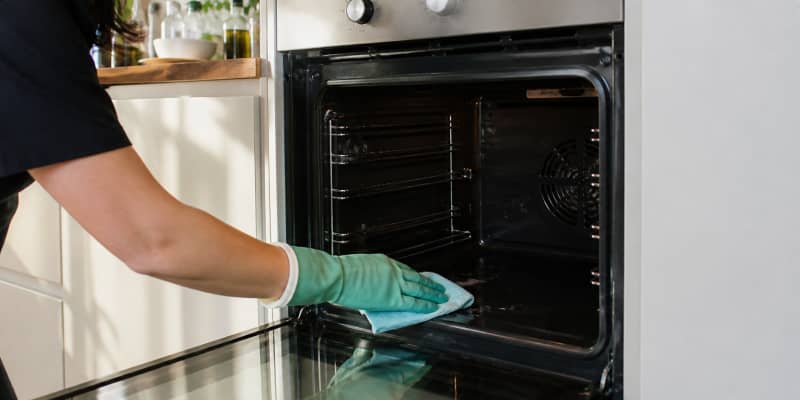
Zanussi ovens are workhorses of the UK rented and family kitchen — practical, robust and easy to clean when you know your model. Landlords across London have Zanussi in thousands of properties precisely because they take heavy use and outlast most competitors. The trick is knowing what interior you have, because Zanussi produce pyrolytic, catalytic, hydrolytic and standard-enamel models under near-identical exterior styles. Here is how to clean a Zanussi oven, whether it has a pyrolytic cycle, catalytic liners, or plain enamel walls — including the door glass strip-down that transforms a tired oven overnight.
Quick answer
To clean a Zanussi oven, identify the interior first. Pyrolytic models: remove all shelves and rails then run the Pyrolyse cycle (usually 90 or 150 minutes). Catalytic models (with rough textured rear or side panels): run the empty oven at 250 °C for one hour to oxidise any residue. Aqua Clean: pour 300 ml water into the base and run the hydrolytic cycle. Standard enamel: apply a bicarbonate-of-soda paste overnight and wipe away. Never use any liquid cleaner on catalytic panels — the pores clog permanently.
Identifying your Zanussi
- Pyrolytic — has a Pyrolyse or Self-Clean menu setting
- Catalytic — has a rough textured coating on the rear wall or sides
- Aqua Clean — hydrolytic steam cycle using water in the base
- Standard — smooth enamel throughout
The rating plate inside the door lists which is which. Zanussi model numbers begin with ZOP or ZOA on pyrolytic/aqua models and ZOB or ZOU on standard enamel.
Pyrolytic self-clean
- Remove all shelves, side rails and trays.
- Wipe out any loose debris and drain pooled fat with a paper towel.
- Close the door and select Pyrolyse.
- Choose the duration — usually 1.5 or 2.5 hours.
- The door locks until the cycle finishes and cools.
- Wipe the resulting ash away with a damp cloth.
- Wash the shelves in the sink separately with warm soapy water.
Read also: How to clean a Hotpoint oven
Catalytic panels
Catalytic liners work automatically at cooking temperature — anything over 200 °C oxidises grease. If you spot glossy or blackened patches on a rough panel, run the empty oven at 250 °C for an hour to burn the residue off. Never use any liquid cleaner on catalytic panels — the pores clog and the coating stops working, and replacement panels are expensive (fifty pounds and up). Wipe adjacent enamel surfaces with bicarbonate paste, but keep the paste off the catalytic areas.
Read also: How to clean a Samsung oven
Aqua Clean cycle
Zanussi’s Aqua Clean is a low-temperature hydrolytic cycle. Pour 300 ml of tap water into the small depression in the base of the cold oven, close the door, and select the Aqua Clean setting. The oven heats water to steam for approximately 30 minutes, softening any residue on the enamel. Wipe out with a soft cloth once cool. Best for weekly maintenance rather than heavy cleaning.
Manual cleaning for enamel Zanussi
- Cool the oven completely.
- Remove shelves and side rails.
- Make a paste from six tablespoons of bicarbonate of soda and warm water.
- Apply to all enamel surfaces, avoiding fan cover and element.
- Leave overnight (12 hours minimum), then wipe with a damp cloth.
- Spray any stubborn spots with white vinegar and wipe again.
- Rinse with clean water and dry.
Cleaning shelves and rails
- Soak in the bath in hot water with two dishwasher tablets for two hours
- Scrub with a nylon brush
- Rinse and dry immediately to avoid rust
- Never send them through the pyrolytic cycle — they will discolour permanently
- Replacement shelves are cheap through Zanussi spares if yours are too far gone
Read also: Clean oven door hinges and seals
Door glass strip-down
- Open the door fully and locate the hinge locks — Zanussi hinges usually have flip-out clips.
- Flip both locks outward, then partly close the door until it stops.
- Lift the door away and lay flat on a towel.
- Slide the trim at the top to release the inner glass panes.
- Wipe both glass panes with bicarbonate paste and rinse.
- Dry, refit in order (usually two or three panes), and clip the door back into the hinges.
Between-clean maintenance
The single biggest thing that keeps a Zanussi looking new is wiping spills while warm — never hot, but warm enough that steam still rises from a damp cloth. Keep a designated microfibre in a nearby drawer. For rental properties, a monthly pyrolytic cycle plus a shelf soak between tenants means the oven passes any inspection. Landlords should note that a fully clean oven is one of the top three items tenants look at during check-in.
Common Zanussi issues and fixes
A Zanussi that has been letting off a burning smell for the first few uses is normal — the factory coating burns off during the first three hours of cooking. If a burning smell returns weeks later, food debris has landed on the element; run an empty 200 °C cycle for 15 minutes to burn it off, then wipe out the ash. A fan oven that heats unevenly usually has a fan-cover screw slightly loose; retighten by hand if visible from inside the cavity. Persistent condensation on the inner door glass points to a worn door seal — replacements from Zanussi spares fit any standard model.
What to avoid
- Oven cleaner sprays on catalytic panels — they ruin the coating
- Wire wool on any enamel — leaves scratch marks that hold future grime
- Water on the control panel or seals
- Running pyrolysis with shelves in — they lose their bright finish
- Foil on the base of the oven — reflects heat and warps the enamel
Conclusion
Match the method to the cavity and Zanussi ovens stay bright for years. Pyrolyse where fitted, dry-heat oxidation on catalytic, bicarbonate paste on plain enamel — three simple rules. For an annual deep clean, book a service at Maggie’s oven cleaning in London.
