
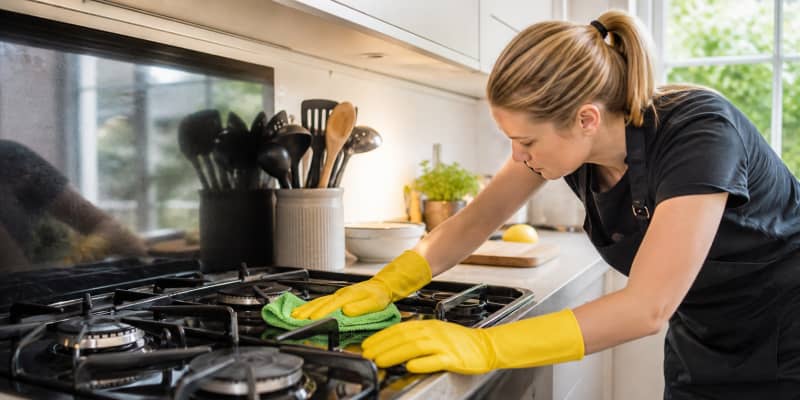
A clear restaurant cleaning schedule template is the difference between a spotless kitchen and a stressful EHO visit. Written schedules turn cleaning from something everyone forgets into something no one can skip, and give you the paper trail insurers and inspectors ask for. This template is used across independent London restaurants, hotel kitchens and hospitality groups; adapt the tasks to your menu and site, but keep the structure.
Quick answer
A restaurant cleaning schedule template should list every task, its frequency, the responsible role, the products to use and a signature column. Split it into daily, weekly, monthly and periodic frequencies, and pin a printed copy on the kitchen wall. Keep 12 months of signed schedules on file, and note the products with their dilution ratios and safety data sheet references.
What every cleaning schedule needs
Before you fill in tasks, agree the columns you will use. A workable format:
- Task description.
- Frequency (daily, weekly, monthly, quarterly).
- Responsible role (KP, chef, manager, contractor).
- Product and dilution.
- Method and safety notes.
- Signature and date.
- Manager verification.
Read also: EHO compliance checklist for UK commercial kitchens
Tools and products to standardise
- Colour-coded chopping boards and cloth colours (red raw meat, blue raw fish, green salad, yellow cooked meats, white bakery).
- Two-bucket mop system and wet floor signs.
- Ecolab or Prochem catering degreaser with visible dilution charts.
- Alcohol sanitiser sprays (BS EN 1276 rated).
- Dedicated colour-coded cleaning caddies per area.
- Wall-mounted product dispensers to prevent decanting errors.
Daily cleaning tasks
Daily tasks are the foundation. If any of these are missed, the rest of the schedule cannot compensate.
- Sanitise all prep surfaces after each service.
- Wipe fridge door handles and light switches.
- Empty and wash grease trays under the grill and hob.
- Scrape and clean the flat top or induction hob.
- Sweep and mop all floors, including under prep tables.
- Empty bins, wash liners, sanitise lids.
- Clean hand-wash basins and refill soap and towels.
- Run dishwasher rinse and drain cycles overnight.
- Wipe down door handles, walk-in fridge handles, and coldroom seals.
Weekly cleaning tasks
Weekly tasks catch the areas that daily wipes cannot reach.
- Empty and clean all fridges and freezers.
- Descale coffee machine and combi oven steam ports.
- Deep clean the fryer and change or filter oil.
- Wash canopy grease filters in the dishwasher or by hand.
- Move small equipment and clean behind and beneath.
- Sanitise bin storage area.
- Wipe walls and door frames to shoulder height.
- Sanitise ice machine scoops and internal walls.
Read also: How to clean a commercial combi oven
Monthly cleaning tasks
Monthly tasks tackle stubborn build-up that would otherwise accumulate.
- Deep-clean interior of ovens and combi ovens.
- Pull out heavy equipment and clean floor and walls behind.
- Descale dishwasher and check wash and rinse arms.
- Clean and sanitise ice machine internally.
- Wash ceilings above the cook line.
- Empty and clean dry stores; rotate stock.
- Wash ventilation grilles in customer areas.
- Test and replace anti-slip mats where worn.
Quarterly and yearly tasks
These are usually done by contractors and produce certificates for your compliance folder.
- TR19 canopy and duct clean (frequency by kitchen size and use).
- Grease trap empty and clean (usually monthly or quarterly).
- Gas safety and cooker inspection (yearly, Gas Safe engineer).
- Electrical PAT testing.
- Water tank clean if applicable.
- Pest control routine visits (usually bi-monthly).
- Fire door and extinguisher inspection.
Read also: Kitchen porter cleaning routine
Making the schedule stick
The best schedule in the world only works if staff can see it and use it.
- Print A3 copies for the kitchen wall and manager’s office.
- Cover in a wipe-clean sleeve so staff can initial each row.
- Review at every shift handover.
- Retain 12 months of signed schedules with your food safety records.
- Rotate KP roles so no one area is always assigned to the same staff member.
- Reward compliance publicly, correct lapses privately.
Common mistakes to avoid
- One-size-fits-all schedules copied from another restaurant without menu adjustments.
- Undated or unsigned entries; they carry no evidential weight.
- Products decanted into unlabelled bottles.
- Contractor visits missing from the same document.
- Standards changed verbally without updating the printed schedule.
Digital alternatives
Software such as Trail, FoodDocs and Jolt digitises schedules and time-stamps every signature. Insurance underwriters and larger EHOs increasingly accept digital records, but a paper backup is still worth keeping in case of Wi-Fi outages or system changes.
Adapting the template to your menu
A pizza-focused kitchen has different priorities to a sushi bar, and both differ from a curry house or a burger chain. Add menu-specific tasks: pizza ovens need weekly stone brushing; sushi kitchens need daily sanitiser rotation on cutting boards; wok stations need nightly canopy-filter changes. The template’s structure stays the same but the tasks flex to match what actually happens on the pass. Review the schedule after every seasonal menu change to make sure it still reflects real practice.
Rolling out to new staff
Include the cleaning schedule in every new starter’s induction, walk them through the colour coding on day one, and pair them with a senior staff member for their first week of end-of-shift close-downs. Written schedules only work if new staff understand them from the first shift.
Conclusion
A cleaning schedule is a shared commitment to standards, not a punishment. When the periodic deep cleaning is due, our commercial kitchen cleaning service takes the heaviest jobs off your team’s list and returns certificates for your compliance folder. See our coverage areas to check availability across London.
