
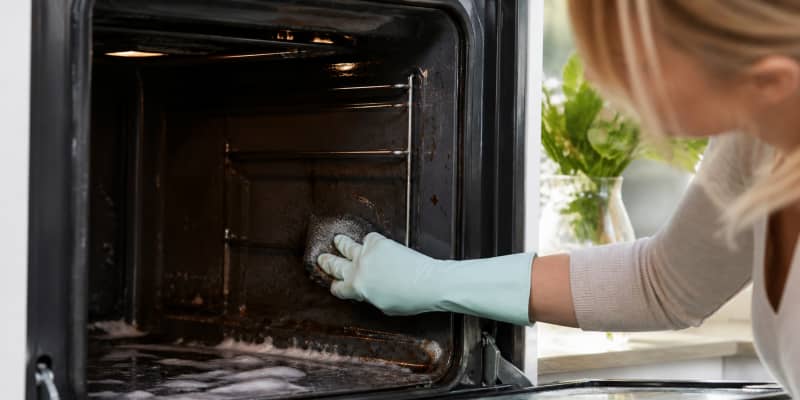
Old, baked-on grease is the enemy every oven owner eventually faces. Whether it is inherited grime from a new flat, the aftermath of a Christmas turkey that spat fat everywhere, or years of small spills that were never wiped up in time, the result is the same: a black lacquer that laughs at any normal cleaning spray. Knowing how to remove burnt on grease from oven walls, floor, and racks turns a job that looks impossible into a manageable evening. Whether you use natural or chemical methods, softening the carbon is the secret – never dry-scrubbing.
Quick answer
To remove burnt on grease from an oven, coat the interior in a thick paste of half a cup of baking soda and three tablespoons of water, leave for 8 to 12 hours, then wipe off with a wet cloth. For carbonised layers, use a caustic-free professional degreaser such as Oven Mate or Astonish Oven and Grill Cleaner and a plastic scraper. Never use wire wool inside a modern enamel cavity, as it leaves scratches that trap future grease.
Why grease bakes on so hard
Every time your oven passes about 200 degrees Celsius, cooking fat oxidises and polymerises into a lacquer that bonds to enamel. Layer after layer, this becomes carbon – the hard, brown-black crust that scrubs feel useless against. Softening the polymer is the only way to lift it cleanly, and that softening is chemistry, not effort. Alkaline cleaners loosen the bonds; acids finish the job.
Read also: How to Clean an Oven: The Complete UK Guide
Cleaning grease from oven with baking soda
This is the safest natural cleaner. Mix half a cup of bicarbonate with three tablespoons of water into a spreadable paste. Coat every interior surface, avoiding the fan and element. Leave overnight. Wipe with a damp cloth, then mist white vinegar to fizz off residue. For heavier grime, add a tablespoon of washing-up liquid to the paste – the surfactants help lift the grease film.
How to remove baked on grease with vinegar too
Vinegar on its own struggles with heavy carbon, but paired with baking soda it makes short work of the residue. Spray liberally on a wet paste and the reaction lifts stubborn spots free. Always use white vinegar, never malt or cider – the pigments in coloured vinegar can stain enamel.
Chemical methods to clean grease from oven surfaces
When baking soda cannot cope, a proper oven cleaner is faster. Wear gloves, safety glasses, and ventilate. Products worth trying:
- Oven Mate Deep Clean Kit – a UK staple with lined gloves
- Astonish Oven and Cookware Cleaner Paste – non-caustic and virtually fume-free
- Elbow Grease Original Degreaser – great for the door glass
- Cif Kitchen Cream – for exterior surfaces only, not the interior
- Bar Keepers Friend for stainless steel accessories
Read also: Cleaning Your Oven with Vinegar and Baking Soda
How to remove grease from oven step-by-step
This is the professional-grade routine we use on the toughest jobs.
- Remove racks and side rails.
- Apply degreaser or thick baking soda paste to every surface.
- Cover the fan opening with a dry cloth.
- Leave for the recommended dwell time (usually overnight).
- Scrape gently with a plastic blade.
- Wipe with hot soapy water, repeated until the cloth stays white.
- Rinse with clean water twice to remove all cleaner residue.
- Buff the door glass with vinegar and a microfibre.
Dealing with the oven floor
Spills that pool at the bottom often carbonise the worst. Use a plastic scraper flat against the enamel, working with the direction of the grain, and re-apply cleaner as needed. If a spill has burned into the enamel and left a permanent brown mark, that is oxidation – it will not affect cooking, and no amount of scrubbing will remove it without damaging the surface.
Read also: Oven Cleaner Fumes: Truths and Myths
Common mistakes to avoid
Rushing is the biggest error. Grease that has taken months to build cannot be scrubbed away in ten minutes, and impatience just wears out your arm. Skipping ventilation is another – even fume-free cleaners release a light vapour that irritates lungs in an unventilated kitchen. And spraying cleaner directly onto the fan or element is a costly mistake; liquid seeping into the motor can cause a short circuit that means a replacement fan.
When to call a professional
If you have layers of black carbon that flake but won’t fully lift, or if the enamel is starting to dull, a professional dip-tank clean will restore it in hours. Long-neglected ovens sometimes need heat-safe pads and enzyme cleaners to bring back the original finish. End-of-tenancy inspections routinely fail on greasy oven interiors, so budgeting for a professional clean when you move out often saves your deposit.
Read also: Top Ten Oven and Kitchen Safety Tips
Conclusion
Burnt-on grease is stubborn but always beatable with the right chemistry and patience. For the ovens that seem hopeless, our technicians remove the door, take out the racks, and dip-clean everything in our vans – see the full oven cleaning service in London for details and pricing.
