
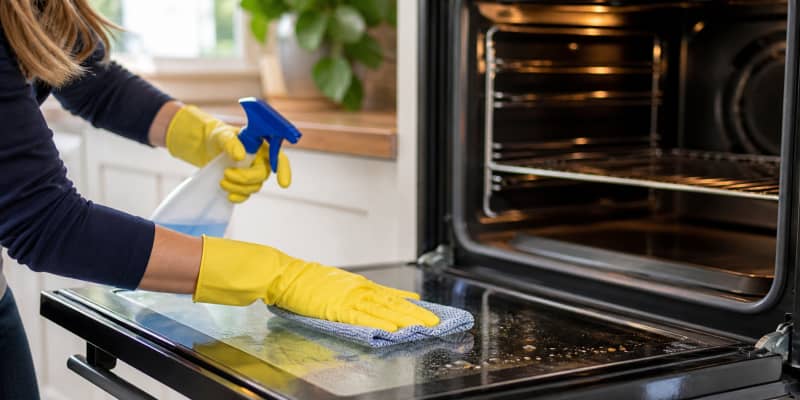
Knowing how to clean an oven properly is the difference between a sparkling cavity and hours of frustrated scrubbing. Whether you have a modern fan oven or an older gas model, the same principles apply: soften the grime first, then lift it off. Most home cooks make the mistake of scrubbing at cold, hardened grease with a sponge, which barely dents the carbon and wears out your arm in the process. This guide walks you through every step a professional would take, from the safest natural methods to when a chemical formula is worth reaching for.
Quick answer
To clean an oven, remove the racks, coat the interior with a paste of half a cup of bicarbonate of soda and three tablespoons of water, leave it overnight, then wipe clean with a damp cloth and finish with a white vinegar spray. For heavy grease, use a dedicated non-caustic oven cleaner such as Astonish Oven and Grill and always wear gloves. Clean the door glass and racks separately for the best finish, and never spray liquid onto the fan or element.
Tools you’ll need
Gather everything before you start so you can work in one uninterrupted session. A well-prepared cleaner works twice as fast as one who keeps stopping to hunt for a scraper.
- Rubber gloves and an apron
- Half a cup of bicarbonate of soda
- A spray bottle of white vinegar
- Two or three fresh e-cloth or microfibre cloths
- A plastic scraper or an old bank card
- An old newspaper or towel for the floor
- A bucket of warm water for rinsing
Prepare the oven before you start
Before applying any oven cleaner, take out the racks, trays, and any removable side liners. Sweep out loose crumbs and burnt bits with a soft brush or the crevice tool of your vacuum. Cover the heating element with a cloth to keep paste and moisture away from the coil, and lay newspaper or an old towel across the floor in front of the oven to catch drips. If your oven sits at eye level in a fitted kitchen, tape a strip of plastic sheeting to the underside of the cabinet above to shield the veneer.
Read also: How to Clean Oven Racks in 30 Minutes
The baking soda method (the safest way to clean an oven)
Baking soda is the gentlest way to loosen baked-on grease without harsh fumes, and it is the method we reach for first in most homes. Mix half a cup of bicarbonate of soda with three to four tablespoons of water until you have a spreadable paste with the consistency of toothpaste. Wear rubber gloves and smear the paste across every interior surface, avoiding the element and the fan cover. Leave it overnight, or a minimum of 8 hours – the longer, the better.
Wipe, spray, and finish
The next morning, wipe out the dried paste with a damp e-cloth or microfibre. Any stubborn brown patches will lift with a plastic scraper or an old credit card held at a shallow angle. Fill a spray bottle with white vinegar and mist the interior – it will fizz on any leftover residue, which you then wipe away for a squeaky-clean finish. If any dull white streaks remain, mist again and buff dry.
Cleaning the oven door glass
The door glass is the first thing anyone sees, so give it the same care as the interior. Apply the same baking soda paste, leave for 30 minutes, then buff with a wet microfibre in circular motions. For streak-free results, finish with a splash of vinegar and a dry cloth. If your model has a removable inner pane, take it out to clean between the layers – grease that settles here can only be reached with the door partially dismantled.
Read also: How to Clean Oven Glass (Inside, Outside, and Between the Layers)
Chemical oven cleaners: when to use them
For neglected ovens with thick carbon build-up – the kind you see at tenancy end-of-let inspections – a chemical oven cleaner will save hours. Choose a caustic-free or fume-free formula if you can, such as Oven Mate or Astonish Oven and Grill. Ventilate the kitchen, and always wear gloves and eye protection. Never spray directly onto the fan, thermostat probe, or bulb cover, and never mix products from different brands.
- Ventilate: open windows and switch the extractor on
- Protect: gloves, long sleeves, and safety glasses
- Test first: check a hidden spot in case of enamel discolouration
- Rinse: wipe with plenty of clean water afterwards, at least three times
Common mistakes to avoid
The same handful of errors ruin most home oven cleans. Do not spray cleaner onto a hot oven – it flashes into fumes and evaporates before it can work. Do not use wire wool inside a modern enamel cavity, as it leaves scratches that trap future grease. Do not skip the rinse after a chemical clean, or the next roast will taste of detergent. And do not close the door on a wet interior overnight – trapped moisture can dull the enamel finish over time.
A simple weekly routine
Between deep cleans, a five-minute weekly wipe keeps grease from setting.
- Wait until the oven is cool but still slightly warm.
- Spray the interior with warm soapy water.
- Wipe with a damp microfibre.
- Buff the door glass with vinegar.
Read also: How to Use a Self-Cleaning Oven Safely
How often to deep-clean your oven
For a household that roasts once or twice a week, a thorough deep clean every three months is enough. If you cook every evening, cut that to six weeks. Before Christmas and Easter is a natural time to reset. Landlords and tenants should schedule a professional clean at the end of every tenancy – inspection reports routinely fail flats on greasy oven interiors.
Read also: Cleaning an Oven with Baking Soda
Conclusion
Cleaning an oven is far easier when you tackle it in stages: soften, scrape, wipe, and polish. Follow the routine above and you will keep your appliance in showroom condition for years. If your oven has been neglected and the job feels too big to face, our team offers professional oven cleaning across London using non-caustic products that leave no fumes or residue.
