
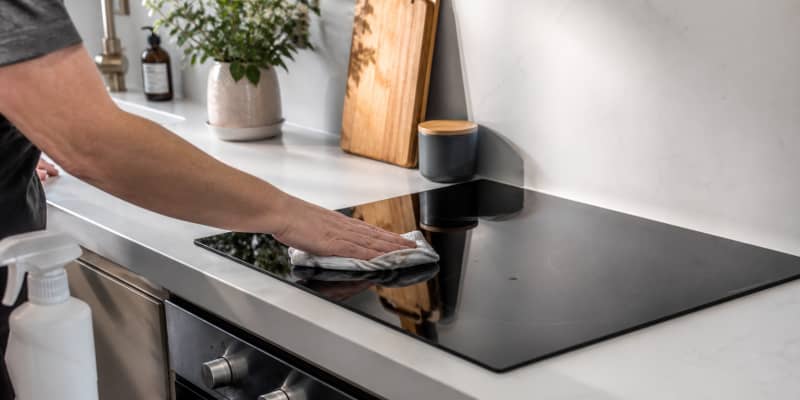
A ceramic hob looks pristine when it is clean and shows every fingerprint when it is not. Sugar spills, hard-water spots, and the classic ceramic hob scratch across the middle ring are the three things every owner runs into within a year of installation. This guide covers how to clean ceramic hob glass from a daily wipe up to a burnt-on rescue, and how to keep marks from turning into permanent damage.
Quick answer
To clean a ceramic hob, wait until it has cooled, wipe with an e-cloth and warm soapy water, and finish with a dedicated ceramic hob cleaner such as Cerapol, Hob Brite or Bar Keepers Friend. For burnt-on food, apply the cream, wait two minutes, and lift the residue with a razor scraper at a shallow angle. Never use scourers or oven cleaner.
Ceramic hob vs induction — same glass, different rules
Ceramic hobs and induction hobs share the same smooth glass surface, so the cleaning rules overlap. The difference is that a ceramic hob uses radiant heating elements underneath the glass and stays hot long after cooking. Sugar and starch that boil over land on very hot glass and set immediately. That is why cleaning ceramic hob glass is more about the moment you catch the spill than about which cream you buy. The best ceramic hob cleaner in the world will not undo two minutes of neglect on a hot ring.
Read also: How to clean an induction hob
What you’ll need
- Soft e-cloths and microfibre cloths
- Washing-up liquid — Method or Ecover
- A ceramic hob cream: Cerapol, Hob Brite, or Bar Keepers Friend
- A glass hob scraper with a razor blade
- Filtered or distilled water for the final rinse
Step-by-step: daily clean
- Wait until the residual heat light has gone off. Even a warm hob smears cleaner across the glass.
- Wipe crumbs and dust off with a dry e-cloth first — otherwise you drag grit across the surface as you clean.
- Wet a clean e-cloth with warm water and a drop of Method washing-up liquid. Wipe the whole surface in small circles.
- Rinse the cloth and wipe again to remove suds.
- Buff dry with a microfibre. In hard-water areas, finish with a filtered-water rinse to stop lime streaks.
Removing a burnt ceramic hob mark
- Cool the hob fully. Attacking hot glass with cream is what causes hairline marks.
- Squeeze a coin-sized amount of Cerapol or Hob Brite onto the mark.
- Leave for two to three minutes.
- Take a razor scraper and, holding it flat at about 15 degrees, slide it under the residue. Do not use the corner.
- Wipe the freed residue away with a damp cloth.
- Repeat with a fresh dab of cream if needed. Two gentle passes always beat one aggressive one.
- Buff dry.
Ceramic hob scratches — reality check
What you can fix
Very light haze marks, streaks from cast iron and dull patches from hard-water deposits can be polished out with cream and elbow grease over a few sessions.
What you cannot fix
True scratches into the ceramic surface are permanent. No polish or filler restores the glass. What you can do is stop them getting worse: never drag pans, keep grit off the surface, and always buff dry after cleaning.
Read also: Cleaning stainless steel hob rings
Stains around the edge and the trim
The stainless-steel trim around a ceramic hob picks up cooking splatter that gets baked on when the burner behind it heats up. A dedicated stainless steel cleaner such as Method Stainless Steel or Bar Keepers Friend, applied with the grain and buffed dry, brings it back. Do not use ceramic hob cream on stainless steel — it leaves a chalky film — and do not use stainless cleaner on the glass.
Daily habits that prevent damage
Use flat-bottomed pans; a curved base wobbles and scores the glass over time. Lift, never drag. Wipe spills the moment the residual heat light goes off. Keep sugar containers off the hob — a knocked-over jar melts in seconds if a ring is warm. Reapply hob cream once a week even when the surface looks fine; the polish is what makes the next spill lift off easily. Make a small habit of running a dry palm across the glass after every cook; you feel a tacky patch before you see it, and a quick wipe now prevents a scraper job tomorrow.
Cleaning around the controls
Touch controls are the most delicate part of a ceramic hob. Never spray hob cream directly onto them — apply the cream to your cloth first, then work around the edges of the panel. Cotton buds handle the tiny gap where the glass meets the trim. If your touch controls become unresponsive after cleaning, the panel is likely damp; leave the hob switched off for an hour and the sensor will reset once it dries out completely.
Conclusion
Cleaning ceramic hob glass is a rhythm rather than an event. Wipe daily on a cold surface, deep-clean with cream weekly, and never reach for scourers. If yours has been neglected and you are staring at a haze of old spills, book our appliances cleaning service in London and we will restore the glass without any risk of new scratches.
