
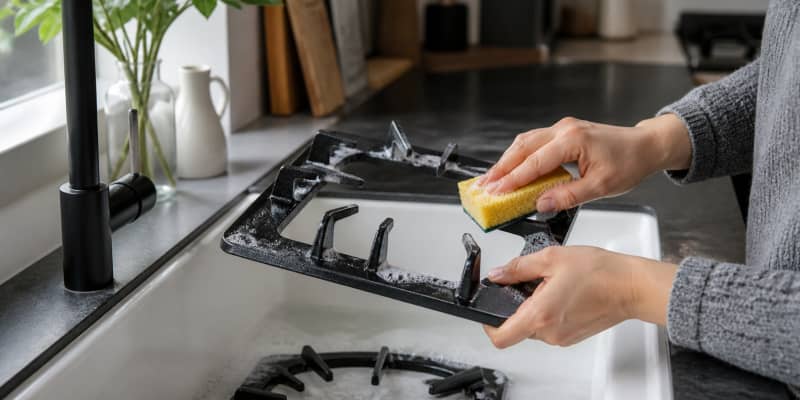
Cast iron pan supports are the heaviest, most robust part of any gas hob — and the part most likely to be ruined by the wrong cleaner. Whether you have a modern six-burner range or a compact two-burner domino unit, cleaning cast iron hob grates the right way means gentle products, quick drying and an occasional re-oiling. Get it right and they will outlast the hob itself.
Quick answer
To clean cast iron hob grates, soak them in warm soapy water for thirty minutes, scrub gently with a soft brush and rinse. Dry immediately with a cloth, then wipe with a thin film of vegetable oil to prevent rust. Never put cast iron in the dishwasher and never leave it to air-dry.
Why cast iron needs special care
Cast iron is porous, and although it is coated at the factory with an enamel or matte black finish, that coating chips over time from the weight of pans. Once bare metal is exposed, water is the enemy. Rust starts within hours if a grate is left wet or stacked in a damp cupboard. On the other hand, cast iron cleans up beautifully with warm soapy water when you catch spills fresh. Learning how to clean a cast iron grate is really learning to keep it out of extended contact with water.
Read also: How to clean a gas hob properly
What you’ll need
- Rubber gloves
- Warm soapy water — Ecover or Method washing-up liquid
- A soft brush or old toothbrush
- Bicarbonate of soda for stubborn grease
- A thick tea towel or lint-free cloth
- Vegetable oil (any neutral cooking oil)
- An old towel to lay under the grates while they dry
Step-by-step method
- Turn the hob off and let the grates cool completely.
- Lift each grate off the hob and lay them on an old towel.
- Fill the sink or a large bowl with warm soapy water. Submerge one grate at a time — cast iron is heavy enough to chip a sink if dropped.
- Soak for thirty minutes.
- Scrub the underside first with a soft brush — that is where grease pools — then the top surface.
- For hardened spots, make a paste of bicarbonate of soda and water and work it in with the brush.
- Rinse under warm water.
- Dry immediately with a thick tea towel. Do not leave to air-dry.
- Wipe a thin film of vegetable oil across each grate with kitchen paper. This re-seasons the surface and blocks moisture.
- Refit the grates onto the hob.
Removing rust from a bare patch
Light surface rust
Make a paste of bicarbonate of soda and a little water. Rub with a soft brush, rinse, dry, and re-oil. Repeat if any rust remains.
Deeper rust
A very fine steel wool (grade 0000) with a drop of vegetable oil works on bare cast iron — but only on grates that no longer have their factory enamel. Rinse, dry and re-oil immediately.
Enamel-coated grates
Never use steel wool on enamel — you cut through the coating and expose bare metal. Stick to bicarbonate paste and a soft brush.
Read also: Aga cleaning checklist
Re-seasoning and long-term care
Every three months, warm the grates in the oven at 100 degrees for ten minutes, then rub a thin film of vegetable oil across them while they are warm. Let them cool naturally. This mimics the seasoning process used on cast-iron cookware and keeps the finish supple. A well-seasoned grate is nearly non-stick — spills wipe off next time without soaking. If the finish has completely worn away and the underside is grey rather than black, one or two seasoning sessions bring it back.
What to avoid
Do not put cast iron in the dishwasher. The detergent strips the seasoning and the long wet cycle causes flash rust. Do not use oven cleaner — the caustic strips the finish and reacts with the metal. Do not leave grates soaking overnight. Do not stack them wet in a cupboard.
How often to clean
Wipe grates after every heavy cook while they are warm — a damp e-cloth is enough. Full soak-and-scrub once a fortnight. Re-oil after every deep clean. Re-season quarterly. In a busy family kitchen this is ten minutes a week and pays back in grates that never rust.
Storing spare grates and refitting
If your gas hob has multiple grates and you keep a spare set for entertaining, store them fully dry and lightly oiled in a cupboard away from steam. A folded tea towel between each grate stops the enamel chipping. When refitting after a clean, drop each grate onto its pins from directly above rather than sliding it into place — sliding is what scratches the surrounding hob and chips the underside of the grate.
Cast iron on Aga and range cookers
Aga owners and range-cooker owners will recognise most of this method. The main difference is scale: an Aga hotplate cover or a wide range grate weighs several kilos and holds more heat, so the soak needs a bigger basin and a lot more patience. Never dunk a hot Aga grate straight into cold water; the shock can crack the iron. Let it cool naturally first, then follow the same soak-and-oil routine.
Conclusion
Cast iron rewards routine and punishes neglect. Warm water, quick drying and a film of oil are the whole method. If yours have gone rusty in patches or the enamel has started to lift, book our appliances cleaning service in London and we will restore them without cutting into the coating.
