
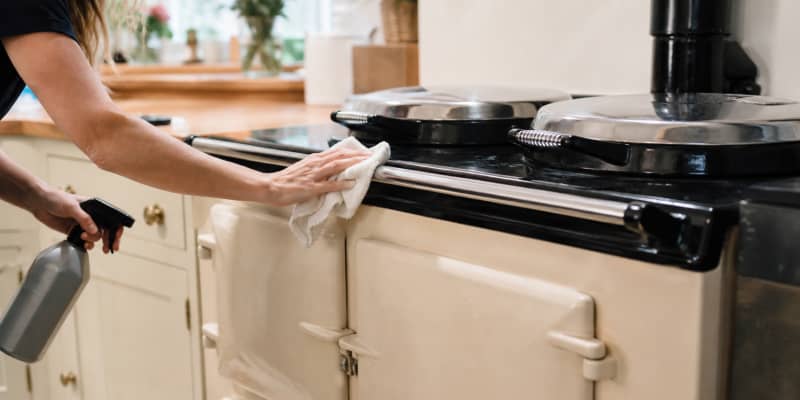
A structured Aga cleaning checklist stops small spills becoming baked-on stains and keeps the enamel, hotplates and chrome lids showroom-fresh. This routine is the same one our engineers follow before a professional Aga service, broken into weekly, monthly and yearly tasks. Aga cookers are lifetime appliances; treat one well and it will be handed down to the next generation. Treat one badly, and the enamel will dull, the chrome will pit and the ovens will smell of decades-old grease long before their engineering fails.
Quick answer
An Aga cleaning routine needs three tiers: daily wipes with warm soapy water on the enamel, a monthly deep clean of hotplate covers, shelves and ovens, and a yearly professional Aga cleaning service to restore the enamel and check the door seals. Always cool the Aga to hand-warm before applying any product, and never use caustic oven-cleaner sprays, vinegar or lemon juice on the enamel.
Daily Aga cleaning tasks
Little and often is the secret to an Aga that stays gleaming with no scary deep clean at the end of it. A minute or two after every cooking session pays back tenfold.
- Wipe the enamel top plate with a damp microfibre after every use.
- Sweep crumbs from around the hotplate covers with a dustpan brush.
- Check the front rail for drips and wipe with a soapy cloth.
- Look at the chrome lids for splashes before closing.
Weekly Aga cleaning tasks
Aga cookers live at temperature, so grease sets quickly. A short weekly routine prevents 90 per cent of stubborn stains.
- Wipe the enamel top plate thoroughly with warm soapy water.
- Brush the hotplates when warm, never wet.
- Lift the chrome lids and clean the underside with a soft cloth.
- Wipe the front rail and towel rail with warm soapy water.
- Empty the roasting oven of crumbs using a dustpan brush.
- Wipe the door glass on all ovens with a soft cloth.
Read also: How to clean Aga hotplates and enamel lids
Monthly Aga deep clean
Once a month, plan a slower session when the Aga has cooled enough to work on the enamel safely. Slumber the Aga overnight if it is oil or gas-fired, or turn an electric model right down. Choose a mild day if the Aga is your main source of kitchen heat.
Step-by-step monthly clean
- Remove the oven shelves and cold plain shelf; soak in hot soapy water in the sink for one hour.
- Vacuum the roasting oven floor and wipe with a damp cloth.
- Clean the enamel front with a soft sponge and Aga-approved cleaner.
- Polish the chrome lids with vitreous enamel or Aga stove polish, buffing in circles.
- Wipe the flue collar and check for soot build-up around it.
- Refit shelves once dry and buff the front with a dry microfibre.
- Clean the door seals with a barely damp cloth; never soak.
Read also: Aga cleaning: what NOT to use and why
Yearly Aga service and professional deep clean
Once a year, book a professional Aga cleaning service to complement your engineer’s mechanical service. A specialist clean uses a dip tank for shelves, a controlled cool-down of the ovens, and a full re-polish of the enamel with cutting compounds where needed.
Ask your professional to check the door seals, hotplate covers for chips, and the enamel around the burner cover on oil and gas models. If chips are spotted early, they can be treated before rust takes hold. Combine the deep clean with your Aga engineer’s yearly service (burner and flue check for gas and oil; element and thermostat for electric); the cooker is already cool and ready. See our guide to preparing your Aga for a professional deep clean so the engineer arrives to a ready cooker.
Aga cleaning products worth keeping in the cupboard
- Aga-approved enamel cleaner (mild, non-caustic).
- Aga stove polish or vitreous enamel polish for chrome lids and towel rail.
- Bicarbonate of soda for light stains and heavy grease.
- Bar Keepers Friend for pan-transfer streaks, used sparingly.
- Microfibre cloths (colour code by area to avoid cross-contamination).
- A wire brush for the hotplates only.
- Dustpan brush for crumbs.
Common mistakes to avoid
- Reaching for oven-cleaner spray when a bicarbonate paste would do the job safely.
- Cleaning the hotplates with water; the thermal shock can crack the cast iron.
- Using lemon juice or vinegar for a “natural” clean; both etch vitreous enamel.
- Polishing a hot chrome lid; the polish bakes on and ghosts the surface.
- Ignoring small chips; rust starts fast on exposed cast iron.
How often to book a professional clean
Every 12 months is our standard recommendation for a family Aga in daily use. Light users can stretch to 18 months. Heavy users, keen bakers or Aga owners in hard-water postcodes across London should go every 9 to 12 months to keep enamel and chrome at their best.
Frequently asked questions
Can I use Aga stove polish on chrome as well as enamel?
Yes, that is exactly what it is formulated for. Apply sparingly with a microfibre and buff in circles.
Should I turn the Aga off during a weekly clean?
No, unless you are doing a full monthly deep clean. Wipe the enamel with the cooker at operating temperature but avoid applying polish to hot surfaces.
How do I get rid of a smoky smell after a spill?
Wipe up the spill immediately, then run a small tray of vinegar and water in the roasting oven briefly to neutralise (in a heat-safe container away from enamel).
Conclusion
Regular little jobs beat the once-a-year panic clean every time. Combine your weekly and monthly checklist with a yearly professional visit from our Aga cleaning service and your cooker will stay in the condition it deserves for decades. See our coverage areas to check we cover your postcode.
