
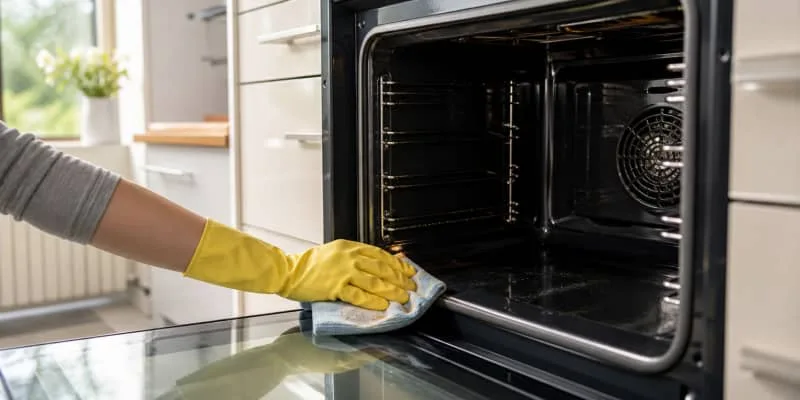
Bosch ovens sit somewhere between Neff and Siemens in the family — sharing many parts, and equally sensitive to harsh cleaners. The range spans standard enamel builds, EcoClean models with a ceramic self-oxidising rear panel, AquaClean hydrolytic units, and higher-end Series 8 pyrolytic ovens. Each cleans differently, and using the wrong method can ruin a factory coating that cannot be repaired. Learning how to clean a Bosch oven, whether pyrolytic, EcoClean or manual, keeps the enamel and self-clean coating working for years and preserves resale value.
Quick answer
To clean a Bosch oven, first identify the interior. Pyrolytic models: remove all shelves and rails, then select Pyrolyse from the menu. EcoClean models: run empty at 250 °C for one hour to oxidise light grease on the ceramic coating. AquaClean: pour 400 ml of water into the base and run the low-temperature steam cycle. Standard enamel: apply a bicarbonate-of-soda paste overnight and wipe away. Never spray caustic oven cleaner on EcoClean or pyrolytic coatings — the pores clog and the coating stops working.
Identifying your Bosch oven type
- Pyrolytic — has a Pyrolyse setting on the display and a self-lock door
- EcoClean — has a rough ceramic coating on the rear wall and ceiling
- AquaClean or hydrolytic — has a water-based low-heat clean option
- Standard enamel — no self-clean; cleaned manually
Check the model number sticker inside the door — it starts with HB, HRG or HSG depending on features, and the manual (a PDF is on the Bosch UK site) confirms which cleaning modes are supported.
Pyrolytic self-clean step-by-step
- Remove all shelves, side rails and pizza stones.
- Wipe out obvious debris and pooled fat with a paper towel.
- Close the door and select Pyrolyse from the menu.
- Choose duration: 1h15 for light, 2h30 for heavy soiling.
- Ventilate the kitchen and keep small children and pets away — the oven surface can reach 80 °C outside during pyrolysis.
- Once cool, wipe out the fine ash with a damp cloth.
- Return shelves after washing separately in warm soapy water.
Read also: How to clean a Neff oven
Using EcoClean
EcoClean’s ceramic coating oxidises spills at high temperature. Bosch recommend filling the oven with a shelf of empty trays to help distribute heat, then setting to 250 °C and running for one hour with the door closed. This works for regular light grease but not for heavy carbonised deposits — those need manual cleaning of the base and door before the EcoClean cycle. Never spray any liquid cleaner onto the EcoClean coating — it clogs the pores and permanently reduces the coating’s ability to burn off future grease.
Read also: How to clean a Miele oven
AquaClean cycle
Some Bosch ovens have a hydrolytic clean cycle. Pour 400 ml of water into the small depression in the base of the cold oven, close the door, set the AquaClean button, and let the low-temperature steam (around 90 °C) soften residue for 30 minutes. Wipe out afterwards with a soft cloth. This works for light soiling only and is best used weekly, not left for months. Follow with a bicarbonate wipe for stubborn patches on the sides.
Manual cleaning safely
- Cool the oven completely.
- Remove shelves and rails.
- Mix a paste of bicarbonate of soda and warm water.
- Apply to interior enamel, avoiding the fan cover and top element.
- Leave overnight (a minimum of 8 hours).
- Wipe with a damp microfibre — spray white vinegar to help lift residue.
- Rinse with clean water and dry with a tea towel.
Cleaning the door glass
- Open the door fully and press the two hinge locks outward
- Lift the door off carefully — support the weight; Bosch doors are heavier than they look
- Lay flat on a folded towel
- Slide the retaining strip at the top to release the inner glass panes
- Apply bicarbonate paste to each pane; leave 30 minutes
- Wipe clean, dry, refit in order and clip the door back into the hinges
Read also: How to use a self-cleaning oven
Care between deep cleans
The single biggest thing that extends a Bosch oven’s lifespan is wiping spills while still warm — not hot, but warm. A five-minute wipe of the base after every roast prevents 90% of the build-up that leads to a heavy clean. Keep a designated microfibre for oven-warm wiping in a nearby drawer. On EcoClean models, run the empty 250 °C cycle every two weeks even if the oven does not look dirty — the coating works best on light soiling.
Cleaning the shelves and rails
Bosch shelves fit into either wire side racks or telescopic rails on Serie 6 and Serie 8 models. Soak shelves in the bath in hot water with two dishwasher tablets for two hours, then scrub with a nylon brush and dry immediately with a tea towel to prevent flash rusting. Telescopic rails should never go through the pyrolytic cycle — the ball bearings inside seize. Wash them by hand in warm soapy water, rinse, and apply a light dab of food-safe grease to the tracks once dry.
What to avoid
- Caustic oven cleaners on EcoClean or pyrolytic linings
- Wire wool on the enamel base
- Running pyrolysis with shelves inside — they discolour permanently
- Any spray cleaner on the control panel
- Placing foil on the base — it reflects heat back at the element and can damage the enamel
Conclusion
Match the cleaning method to your Bosch oven type and everything stays working as designed. Pyrolyse for Series 8, EcoClean at 250 °C for the ceramic-lined models, AquaClean steam for light residues, and bicarbonate paste for everything else. For an annual deep clean including the door glass, fan and racks, book a professional at Maggie’s oven cleaning in London.
