
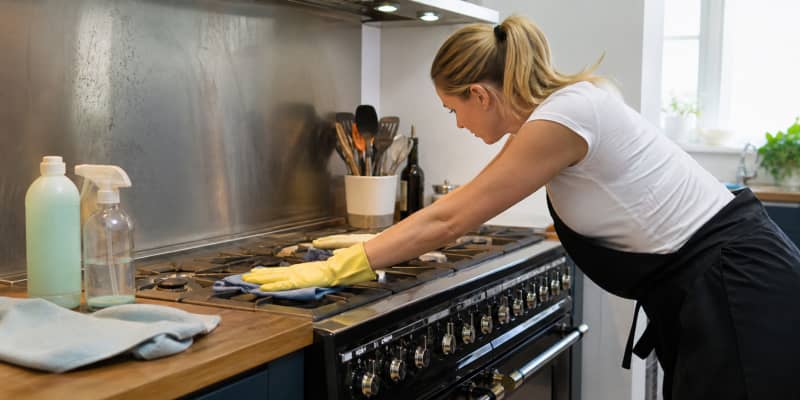
A well-drilled kitchen porter cleaning routine is the backbone of every professional kitchen. Chefs cook the food, but KPs keep the kitchen running by staying ahead of the pot pile, the floor and the bins. Get the KP routine right and the head chef can focus entirely on the pass; get it wrong and even the best-designed kitchen falls apart at 20:00 on a Saturday. This guide covers the full daily and weekly routine used in busy London restaurants, plus the safety habits every KP should learn on day one.
Quick answer
A kitchen porter cleaning routine covers pre-service prep, in-service dish flow, mid-service floor and bin management, and end-of-service deep tasks like sinks, mop rooms and drains. The KP works to a shift checklist countersigned by the head chef. Non-slip footwear, colour-coded cloths and a two-bucket mop system are non-negotiable.
Pre-service setup
The first hour of a shift sets the tone for the whole service. A KP arriving early has time to sort the deep sink, dishwasher and floor before the chefs need them.
- Turn on the dishwasher and check the wash and rinse temperatures.
- Refill dish soap, sanitiser and paper towels at every station.
- Empty bins and reline with fresh sacks.
- Sweep and mop the kitchen floor.
- Wipe pass shelves and prep surfaces with sanitiser.
- Check hand-wash basins are stocked with soap and single-use towels.
- Confirm dish rack colour coding: red for raw, green for prep, blue for pastry.
Read also: Restaurant cleaning schedule template
Kit and PPE the KP needs
- Non-slip safety shoes rated at SRC level.
- Waterproof apron and long nitrile gloves.
- Two colour-coded mop buckets (red for greasy, blue for clean rinse).
- Colour-coded microfibre cloths.
- Wet floor signs.
- Bin bags in a size that matches the bin (not oversized bags that snag).
During service
The KP’s job in service is to keep clean pans and plates flowing back to the chefs while bins and floors stay under control.
- Scrape plates into food waste before racking.
- Rack glassware separately from crockery to avoid chips.
- Rinse heavily soiled pans in the pot sink before dishwashing.
- Empty dishwasher racks the moment they finish; heat kills bacteria only if you unload dry.
- Sweep and spot-mop between courses; do not chase mops between chefs.
- Replace bin liners as soon as they fill.
- Warn chefs before you cross a wet floor with a wet floor sign.
Back-of-house end of service
After the last cover, the KP takes the kitchen down for the night.
- Drain and clean the dishwasher (see daily routine).
- Empty and sanitise all bins; wash lids inside and out.
- Scrub the pot sink and taps.
- Mop the floor, working towards the door.
- Wipe the walls behind the pot wash to shoulder height.
- Wash and disinfect the mop head and cloths, and hang mops upside-down to dry.
- Empty the grease trap skim tray if fitted.
Read also: Commercial dishwasher cleaning and descaling
Front-of-house support
Many kitchens ask KPs to help with front-of-house late in the shift. Typical tasks:
- Bus final tables and take crockery to the pot wash.
- Wipe down bar tops, taps and drip trays.
- Sweep and mop the customer floor.
- Empty coffee grinders and clean espresso machine group heads.
- Wipe menus and check condiments.
- Restock loo roll and hand soap in customer toilets.
Weekly and monthly KP tasks
Beyond daily flow, the KP is usually responsible for tasks that rotate through the week:
- Wash filters from the extractor canopy.
- Clean drains and floor gullies with an enzymatic cleaner.
- Empty and wipe the salt reservoir of the dishwasher.
- Descale kettles and coffee machines.
- Deep-clean bin store area and jet-wash if outdoor.
- Rotate stock in dry stores and note out-of-date items.
Read also: EHO compliance checklist
Common KP mistakes to avoid
- Using the same cloth on chopping boards and the floor.
- Mopping around chefs’ feet during service without a warning.
- Leaving mop heads in dirty water overnight; they harbour bacteria.
- Overloading dish racks so wash water cannot reach every plate.
- Emptying grease trays down the sink; drain blockages start here.
Making the routine work
The best KP routine is written, initialled and reviewed. A head chef who signs off the KP’s checklist at every shift end sets a standard the whole team notices, and the paperwork becomes valuable evidence at the next EHO visit. Rotate senior KPs onto training days for new starters so the standard passes down.
Physical wellbeing and shift patterns
KP work is physically demanding. Standing on hard floors for 10-hour shifts, lifting heavy pot stacks and working in humid conditions all add up. Anti-fatigue mats at the pot sink, a proper five-day-in-seven rota rather than back-to-back doubles, and mandatory 20-minute breaks between wash cycles reduce injury and boost retention. Employers who cut corners on breaks or PPE face higher employers’ liability claims and higher turnover; both are more expensive than doing it right.
Career progression
Many head chefs started as KPs. Encourage motivated KPs to shadow prep and larder work during quieter shifts. The best kitchens promote from within; the best KPs know their standards will carry into the chef roles later.
Frequently asked questions
Should a KP handle food?
Only if trained and holding a valid Level 2 Food Hygiene certificate. Otherwise their remit is cleaning, portering and dishwashing.
Who cleans the deep-fat fryer?
Usually a chef with the KP assisting; the oil change and pan clean is heavy and hot work.
Conclusion
The KP role is skilled and demanding, and no amount of goodwill replaces a periodic professional deep clean of ovens, canopies and drains. Our commercial kitchen cleaning service supports KPs and head chefs across London by handling the heaviest jobs out of hours. See our coverage areas for availability.
